
HEAT TRANSFER IN GLASS MELTING FURNACES (ADVANCED TRAINING)

27 - 28 October 2026
14:00 - 17:30 CET
ONLINE

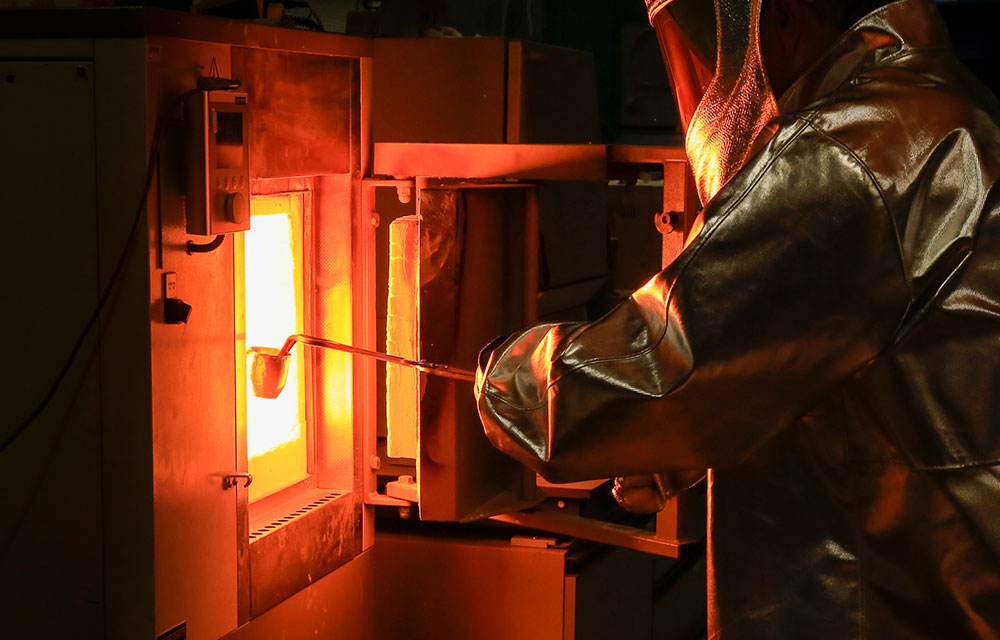
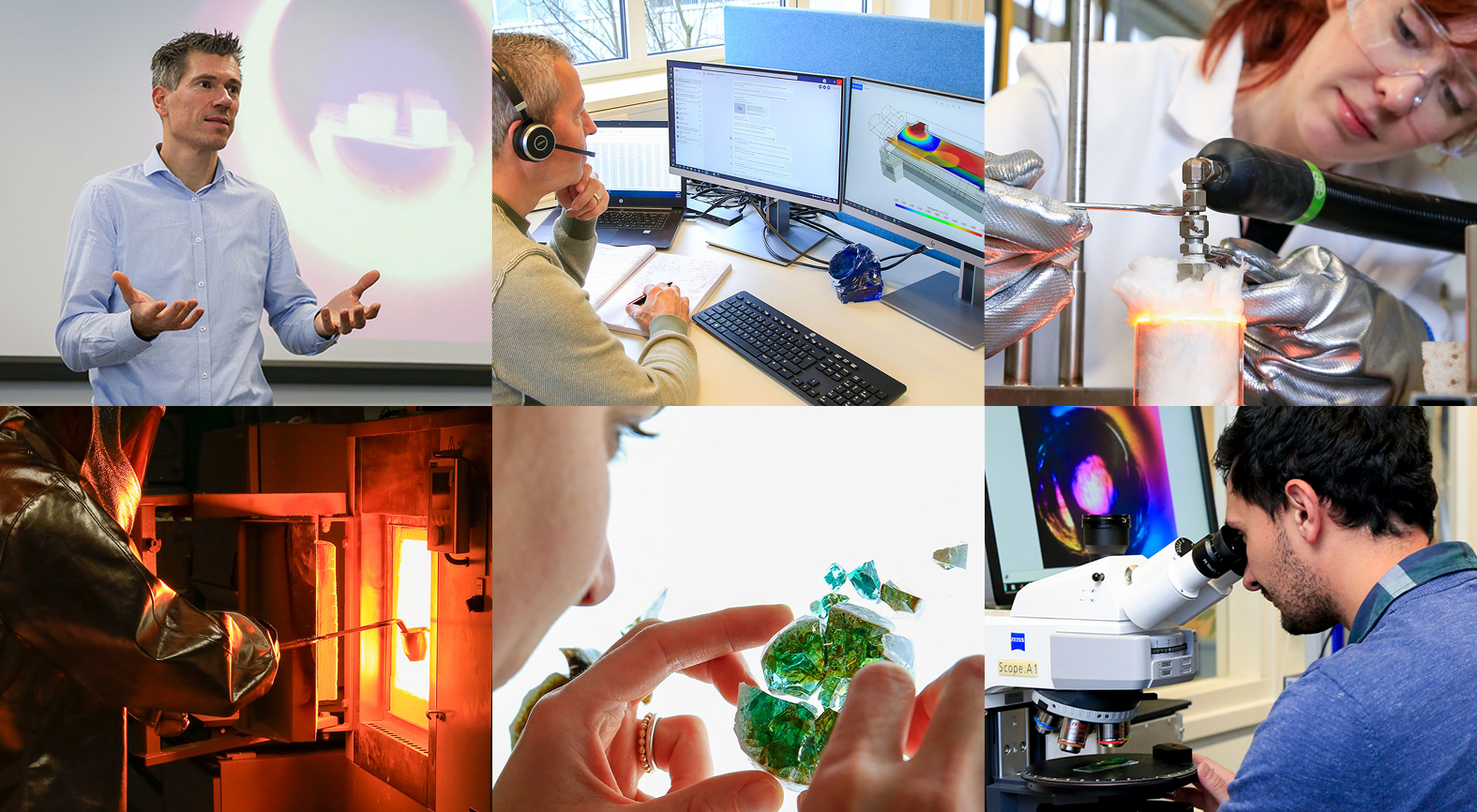
Understanding heat transfer is vital for optimizing glass melting and ensuring high-quality results. This course explores heat transfer mechanisms in the combustion space, batch blanket, and glass melt, with focus on how redox state and coloring ions affect radiative transfer. Emerging technologies like hydrogen combustion and electric melting are also addressed, showing their impact on furnace performance, energy efficiency, and sustainable production.

You should attend if you are interested in:
• Heat transfer in the combustion space
– Flame emissivity
– Effect of soot
– Hydrogen-rich flames
• Heat penetration in batch
– In combustion furnaces
– In electric cold-top furnaces
– Effect of cullet type and content
• Heat transfer in the glass melt
– Radiative heat transfer using a new model for predicting thermal radiation conductivity
– Convection in melting tanks

What you take away:
• Can estimate the impact of the nature and preparation of raw materials on the heat penetration in the batch blanket
• Assess the effect of glass chemistry, color, and redox on radiative heat transfer in the glass melt
• Evaluate the effects of furnace design on convective heat transfer

Trainers
Sjoerd Stelwagen
Sjoerd Stelwagen studied Chemical Engineering at Eindhoven University of Technology. Directly after his study he started as a Technical Specialist at the Furnace department of Ardagh Glass in Dongen, The Netherlands, where he later became Batch and Furnace Manager. He then evolved as EHS manager for the Benelux plants. With more than 16 years of practical glass making experience, he joined Celsian in 2021 to work as a project manager and trainer.
Oscar Verheijen
Oscar Verheijen obtained his PhD from Eindhoven Technical University before joining TNO as a R&D project manager and business development manager of sustainable technologies. He is now R&D and training team leader at CelSian, Board member of the GlassTrend, member of the steering committee of the Dutch Glass Industry (NCNG) and represents the NCNG at European level.
Corinne Claireaux
Corinne Claireaux studied glass and materials chemistry in Rennes and obtained her PhD from the Sorbonne University in Paris in 2014. She worked as an internal trainer and R&D project leader for Saint-Gobain, improving or developing new glass formulations for different businesses and products (float, glass wool, glass-ceramics). She joined CelSian as a glass scientist and trainer in 2019.
Aled Meulenbroek
Aled Meulenbroek obtained a Master’s degree in Applied Physics at Eindhoven university of technology, specializing in fluid mechanics. He also holds a PhD degree in mechanical engineering on “Marangoni effects on hydrogen bubbles on a microelectrode”. He is passionate about Marangoni effects, fluid dynamics, heat transfer and the behaviour of bubbles in glass. He is experienced in supervising/educating students in fluid dynamics. Aled joined CelSian as a CFD engineer where he models glass furnaces and as a trainer at the CelSian Academy.
Price Training costs € 1.300,- per participant.


Price excludes tax and duties.
The 6th participant from the same company can join for free.
REGISTER TO THIS TRAINING (PAY IN EURO)
Your e-mail address(Required)
Scroll to Top